loading...
Summary:
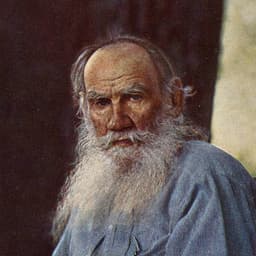
Leo Nikolayevich Tolstoy was born on September 9, 1828, into an aristocratic Russian family at Yasnaya Polyana, near Tula, south of Moscow. He spent his childhood with his three brothers and one sister in Moscow, but lost his mother at the age of two and his father at the age of nine. These repeated losses were later reflected in his autobiographical writings. After receiving his early education at home, Tolstoy entered Kazan School at the age of fourteen. In 1844, he began studying Oriental languages at Kazan University, but later changed his field to law in order to gain the knowledge needed to help the peasants under his care. However, he left his studies unfinished and volunteered to join the army. Tolstoy wrote his first story, Childhood, in 1851 while still serving in the army, and it was published a year later in The Contemporary magazine. He later wrote two more autobiographical works, Boyhood and Youth, as sequels to the first story. While serving in the army, Tolstoy continued to write professionally. Having firsthand experience of war, he depicted its harsh and merciless reality in Sevastopol Sketches. His experience in the Caucasus and the Crimean War led him to leave the army and become a supporter of peace. After leaving the army, he traveled to Europe, where he met major writers such as Charles Dickens and Ivan Turgenev and expanded his knowledge of education for children and adolescents. Inspired by Jean-Jacques Rousseau, he later founded elementary schools in villages. In 1862, Tolstoy married Sophia, a German-born young woman of eighteen. Their marriage produced thirteen children and had many ups and downs. The first period of their life together was full of happiness and emotional stability, which helped him create the lasting masterpieces War and Peace and Anna Karenina. Tolstoy's later life was marked by spiritual and moral turmoil. After gaining fame and wealth, he fell into a deep personal crisis and struggled to understand the meaning of life. In 1882, while working in Moscow as part of the central statistics and census administration, he also witnessed the growing poverty of workers. These events led him to create an organization to support peasants whose crops had been damaged. During this period, his interest in religion deepened, and he retranslated the Bible into Russian. As Tolstoy's fame spread worldwide, pressure and harassment from the government and the Orthodox Church increased. During the third period of his life, the Russian Orthodox Church and the tsarist authorities tightened their control over him, and manuscripts of his books were often seized and censored. Rumors about his mental instability also spread widely. In 1901, after the publication of Resurrection, the Orthodox Church formally excommunicated him. In addition to government pressure, family problems also pushed Tolstoy to leave his wife in his final days and travel south with his family doctor and youngest daughter. This final journey began on November 20, 1910, and ended at Astapovo railway station. He died two days later and was buried in his birthplace.Nothing to show